As a seasoned supplier in the automotive rubber products industry, I’ve witnessed firsthand the importance of measuring the hardness of these components. The hardness of automotive rubber products can significantly impact their performance, durability, and safety. In this blog, I’ll share insights on how to measure the hardness of automotive rubber products, drawing from my years of experience and industry knowledge. Automotive Rubber Products
Importance of Measuring Hardness in Automotive Rubber Products
Before delving into the measurement techniques, it’s crucial to understand why hardness measurement is essential in the automotive sector. Automotive rubber products, such as seals, gaskets, hoses, and bushings, are subjected to a wide range of operating conditions, including temperature variations, mechanical stresses, and chemical exposures. The hardness of these rubber components plays a vital role in determining their ability to withstand these challenges.
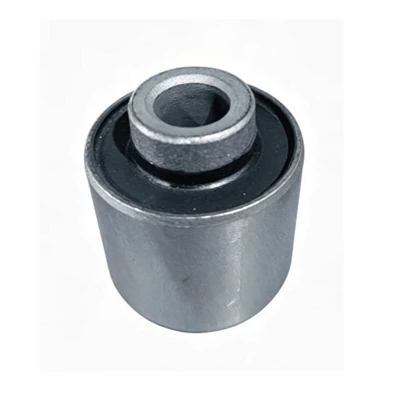
For instance, a seal with the right hardness can effectively prevent fluid leakage, ensuring the proper functioning of an automotive system. If the seal is too soft, it may deform under pressure and fail to provide a reliable seal. On the other hand, if it’s too hard, it may not conform to the mating surfaces, also leading to leakage. Similarly, in the case of rubber bushings, the correct hardness is essential for providing proper vibration isolation and noise reduction, ensuring a smooth and quiet ride.
Understanding the Concept of Hardness in Rubber
Hardness is a measure of a material’s resistance to indentation. In the context of rubber, it indicates the material’s ability to withstand the penetration of an indenter under a specific load. The hardness of rubber is usually expressed on a standardized scale, and the most commonly used scale in the automotive industry is the Shore scale.
The Shore scale has two main types: Shore A and Shore D. The Shore A scale is used for softer rubbers, typically with a hardness range of 10 to 100 Shore A. Most automotive rubber products fall within this range. The Shore D scale, on the other hand, is used for harder rubbers and plastics, with a hardness range of 20 to 100 Shore D.
Measuring Techniques
Shore Durometer Testing
The most common method for measuring the hardness of automotive rubber products is the Shore durometer test. A Shore durometer is a handheld instrument that consists of a spring-loaded indentation tip and a gauge to measure the depth of indentation. The test is performed by applying the durometer to the surface of the rubber specimen and pressing it firmly until it makes full contact.
To ensure accurate results, several factors need to be considered:
- Specimen Preparation: The rubber specimen should have a flat, smooth surface, and its thickness should be at least 6 mm. If the specimen is too thin, the indentation may be affected by the underlying surface, leading to inaccurate results.
- Testing Conditions: The test should be conducted at a standard temperature of 23°C. Temperature can significantly affect the hardness of rubber, so it’s important to control the testing environment. Additionally, the test should be performed on a stable surface to avoid any external vibrations.
- Multiple Measurements: To obtain a reliable hardness value, multiple measurements should be taken at different locations on the specimen. These measurements can then be averaged to get a representative hardness value.
Compression Deflection Testing
Another method for measuring the hardness of automotive rubber products is compression deflection testing. This method measures the force required to compress a rubber specimen by a certain percentage. The test is typically conducted using a compression testing machine, where the rubber specimen is placed between two parallel plates and compressed at a specified rate.
The compression deflection value is calculated as the force required to compress the specimen divided by the original cross-sectional area of the specimen. This value provides an indication of the rubber’s resistance to compression and can be used to evaluate its hardness and stiffness.
Compression deflection testing is particularly useful for evaluating the performance of rubber products under load. For example, in the case of rubber gaskets, the compression deflection value can help determine their ability to seal under different pressures.
Dynamic Mechanical Analysis (DMA)
Dynamic Mechanical Analysis (DMA) is a more advanced technique for measuring the hardness of automotive rubber products. This technique measures the viscoelastic properties of rubber, including its storage modulus (G’), loss modulus (G”), and damping factor (tan δ).
In DMA, a small sinusoidal stress is applied to the rubber specimen, and the resulting strain is measured. The storage modulus represents the elastic component of the rubber’s response, while the loss modulus represents the viscous component. The damping factor is the ratio of the loss modulus to the storage modulus and indicates the rubber’s ability to dissipate energy.
DMA provides valuable information about the rubber’s behavior under dynamic loading conditions, such as vibrations and oscillatory stresses. This information can be used to optimize the design and performance of automotive rubber products, especially those used in applications where dynamic properties are critical, such as engine mounts and suspension bushings.
Quality Control and Assurance
In the automotive industry, quality control and assurance are of utmost importance. To ensure the consistency and reliability of automotive rubber products, it’s essential to establish a rigorous quality control system that includes regular hardness testing.
- Incoming Raw Material Inspection: Before using any raw materials in the production process, it’s important to conduct hardness testing to ensure that they meet the required specifications. This helps prevent the use of substandard materials, which can lead to product failures.
- In-Process Testing: During the manufacturing process, periodic hardness testing should be conducted to monitor the quality of the rubber products. This allows for early detection of any variations in hardness, which can be corrected before the products are finished.
- Finished Product Testing: Once the automotive rubber products are completed, a final hardness test should be performed to ensure that they meet the customer’s requirements. This is a critical step in the quality control process, as it ensures that only high-quality products are delivered to the market.
Guiding to Contact for Purchase Negotiation
Automotive Rubber Products If you’re in the market for high-quality automotive rubber products, I invite you to reach out for a purchase negotiation. As a reputable supplier, we’re committed to providing you with the best products that meet your specific requirements. Our team of experts can assist you in selecting the right rubber products based on your application and performance needs. Whether you need seals, gaskets, hoses, or other rubber components, we have the expertise and resources to deliver. We understand that every automotive project is unique, and we’re dedicated to working closely with you to ensure your satisfaction. Don’t hesitate to contact us for more information and to start the negotiation process.
References
- ASTM D2240 – Standard Test Method for Rubber Property – Durometer Hardness
- ISO 7619 – Rubber, vulcanized or thermoplastic – Determination of indentation hardness
- ASTM D575 – Standard Test Methods for Rubber Properties in Compression
Anhui Denaifu Auto Shock Tech Co., Ltd.
As one of the most professional automotive rubber products manufacturers and suppliers in China, our products have good reputation in the market. Please rest assured to buy bulk high quality automotive rubber products for sale here from our factory. Good service and punctual delivery are available.
Address: No.88 Qingshan Road, Helixi Development Zone, Ningguo City, Anhui Province
E-mail: ngzx_wxm@126.com
WebSite: https://www.denaifuauto.com/
