What is the maximum angle of inclination for a passenger elevator? That’s a question I get asked a lot as a supplier of passenger elevators. I’m here to break it down for you in a way that’s easy to understand, so let’s dive right in. Passenger Elevator
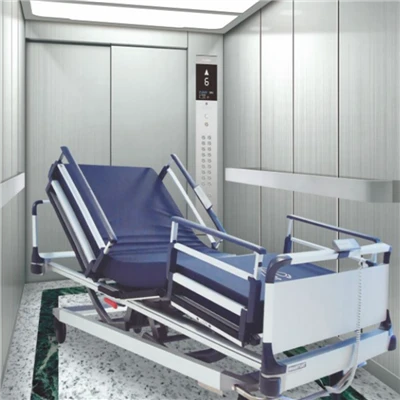
First off, most of the passenger elevators you’re familiar with are vertical. They go straight up and down in a building, and their angle of inclination is 90 degrees relative to the horizontal plane. This is the standard setup for high – rise buildings, offices, and residential towers. The reason for this vertical design is simple: it’s the most efficient way to transport people between floors. When an elevator goes straight up, it can cover the most height in the shortest distance. This means less time traveling between floors and more time being productive or relaxing at your destination.
But what about incline elevators? These are a bit different. Incline elevators are designed to travel on a sloped track. They’re often used in places where there’s a significant change in elevation, like a hill or a cliffside. For example, you might see them at a scenic overlook to transport tourists up and down the slope, or at a large estate where the buildings are located at different elevations on a hilly terrain.
So, what’s the maximum angle of inclination for these incline passenger elevators? Well, it depends on a few factors.
One of the main factors is safety. The steeper the angle, the more difficult it is to ensure the stability of the elevator car. We need to make sure that passengers can stand comfortably inside the elevator without fear of falling. Also, the mechanical components of the elevator, like the cables, motors, and brakes, have to work harder as the angle increases. If the angle is too steep, these components might not be able to handle the load, which could lead to serious safety issues.
Another factor is passenger comfort. Imagine being in an elevator that’s tilted at a very steep angle. You’d start to feel like you’re about to slide off your feet. Most people find it uncomfortable when the angle of inclination makes them feel unsteady. So, for the sake of passenger comfort, we usually try to keep the angle within a reasonable range.
Typically, for commercial and residential incline passenger elevators, the maximum angle of inclination is around 75 degrees. At this angle, it’s still possible to design an elevator that’s both safe and comfortable for passengers. The elevator manufacturer will use special safety features to keep the car stable, like stronger braking systems and more secure guides. The interior of the elevator might also be designed differently, with handrails and a non – slip floor to help passengers maintain their balance.
However, in some very special cases, we’ve seen elevators with an angle of inclination up to 85 degrees. These are usually custom – built elevators for specific locations, like high – end resorts or architectural marvels. Building an elevator with such a steep angle requires a lot of engineering expertise. The cables have to be stronger, and the control systems have to be incredibly precise to ensure smooth and safe operation.
When we’re designing and installing incline elevators, we take a whole bunch of things into account. We look at the building’s architecture, the expected number of passengers, and the local safety regulations. Safety regulations vary from country to country, but they all have the same goal: to protect the people using the elevator. In some places, the regulations might be more strict, limiting the maximum angle to a lower value.
I remember one project we worked on in a coastal area. There was a luxury hotel built on a cliff, and they needed an elevator to connect different levels. The terrain was really steep, and the architects wanted to make the most of the view. We had to do a lot of calculations and simulations to figure out the best angle for the elevator. In the end, we settled on a 70 – degree angle. It was steep enough to fit the building design, but also safe and comfortable for the hotel guests.
Now, let’s talk a bit about the technology behind incline elevators. The way they work is similar to vertical elevators in some ways. There’s a motor that powers the movement of the elevator car, and cables that support the weight of the car and its passengers. But because of the slope, there are some additional components. For example, there are special trolleys that run along the track to keep the car in place and prevent it from derailing. The control system also has to be adjusted to account for the angle, ensuring that the elevator moves at a consistent speed and stops accurately at each floor.
As a passenger elevator supplier, we’re always looking for ways to improve our products. We’re constantly researching new materials and technologies to make our elevators safer, more efficient, and more comfortable. For incline elevators, this includes developing better braking systems, more reliable cables, and advanced control algorithms.
If you’re in the market for a passenger elevator, whether it’s a vertical one for a high – rise or an incline elevator for a unique location, we’re here to help. We have a team of experienced engineers and technicians who can design and install an elevator that meets your specific needs. We understand that every project is different, and we’re committed to providing the best solutions for our customers.

So, if you’re interested in learning more about our passenger elevators or have a project in mind, don’t hesitate to reach out. We can have a chat about your requirements, and I’m sure we can come up with an elevator that’s just right for you.
Panoramic Elevator References:
- Elevator Safety Standards Handbook
- Incline Elevator Design and Installation Manuals
Fuji Express Elevator Co., Ltd.
As one of the most professional passenger elevator manufacturers and suppliers in China, we’re featured by quality products and good service. Please rest assured to buy custom made passenger elevator at competitive price from our factory. Contact us for more details.
Address: No. 7 Nanxiehe, Fuqiang Village, Dongqian Subdistrict, Nanxun District, Huzhou City, Zhejiang Province
E-mail: vivi@fujilift-tech.com
WebSite: https://www.fujilift-tech.com/
