When I first started fielding questions from metal fabricators, woodworkers, and custom part makers as a cutting wheels supplier, the most common inquiry that caught me off guard wasn’t about blade life or material compatibility—it was a blunt, practical one: “Are there cutting wheels for cutting irregular shapes?” For years, I’d watched operators reach for angle grinders and band saws, resigned to tedious sanding and multiple tool changes just to contour a single part. That frustration is why our team poured years of R&D into refining cutting wheels that don’t just slice through straight lines, but adapt to the unplanned curves, asymmetrical notches, and custom profiles that define so many industrial and craft projects. Let’s break down how these specialized wheels work, why they’re different from standard options, and how they’re changing the way makers approach irregular shapes. Cutting Wheels
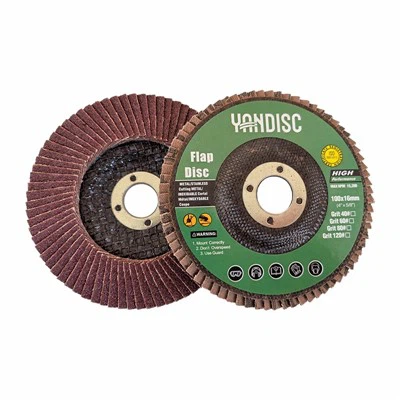
First, it helps to understand what makes a shape “irregular” in the context of cutting. Think of a custom steel bracket for a vintage truck frame, a curved wooden countertop support, or a complex aluminum enclosure for an aerospace sensor. These aren’t uniform rectangles or circles—they require following uneven edges, sharp internal corners, and tight radii that standard cutting wheels simply can’t navigate. Traditional cut-off wheels, for example, are designed for straight cuts; their rigid abrasive grain and thick bond matrix resist flex, which means they can’t pivot smoothly around tight turns without chipping, burning, or veering off the intended line. That’s why many operators would either switch to a jigsaw (too slow for dense metals) or a band saw (limited by blade width) to shape these parts—until now.
Our irregular-shape cutting wheels solve that problem through two key design adjustments: grain composition and bond flexibility. Unlike standard wheels that use a dense, rigid aluminum oxide grain for long straight cuts, these specialized wheels mix fine-grained alumina zirconia with a small percentage of ceramic micro-crystals. The alumina zirconia handles high-speed material removal, while the ceramic grains fracture easily under pressure, creating tiny, sharp edges that follow the contour of the part instead of digging in. The bond, too, is engineered differently: instead of a hard resin or fiberglass matrix that locks the abrasive grains in place, we use a flexible rubber-modified resin bond. This bond gives the wheel a slight give—about 0.2 to 0.5 millimeters of deflection when pressed against uneven edges—letting it track curves smoothly without cracking the wheel or burning the material.
I saw this in action last year with a custom fabricator working on a set of cast iron fire pit enclosures. Before using our irregular-shape wheels, he’d take an average of 45 minutes per enclosure: he’d cut rough straight sections with a standard cut-off wheel, then spend another 30 minutes grinding down jagged edges and smoothing curved corners with a flap disc. When he tried our wheels, he cut the same enclosures in 18 minutes total—no secondary grinding needed. He told me, “I never thought a cutting wheel could bend like that; I could follow the edge of the cast iron without worrying about the wheel catching or breaking.” That’s the real value here: it’s not just about cutting an irregular shape faster, it’s about reducing material waste and labor time, which adds up to thousands of dollars in savings for small and large fabrication shops alike.
But irregular shapes aren’t just for metal. Woodworkers, too, have struggled with cutting curved or asymmetric profiles—think of a custom guitar body, a turned wooden table leg, or a decorative interior trim piece. For years, woodworkers used coping saws or band saws for these cuts, but those tools can’t handle thick stock or dense hardwoods without bogging down. Our team tested our flexible cutting wheels on oak, walnut, and even laminated hardwoods, and found that they cut smooth, burn-free curves in 2×6 stock in half the time of a standard circular saw blade. The key here is that wood doesn’t warp or splinter as much when the wheel follows the contour naturally; the flexible bond allows the abrasive grains to shear through wood fibers cleanly, instead of tearing at uneven edges like a rigid blade might.
Of course, no cutting wheel is one-size-fits-all, and that’s especially true for irregular shapes. The size of the wheel matters most: smaller diameter wheels (4 to 5 inches) are better for tight internal radii—say, a 1-inch notch in a steel plate—while larger wheels (7 to 9 inches) maintain stability for longer, sweeping curves, like a 2-foot arc for a metal sign border. We also offer different grain grits for different materials: 60-grit wheels for thick steel and hardwood, 80-grit for aluminum and softwood, and even 120-grit for precision cuts on thin sheet metal or acrylic, where splintering or chipping is a concern. I’ve had a sign maker use our 120-grit irregular wheels to cut custom acrylic letters for a local café, and he told me the edges were so smooth he didn’t have to sand them before applying vinyl decals. That’s the kind of detail that makes these wheels indispensable for custom makers.
One common misconception I hear from new customers is that flexible cutting wheels are less durable than standard ones. After all, if a wheel bends, does it wear out faster? The short answer is no—when designed correctly, these wheels have the same or longer lifespan than standard cut-off wheels, even on irregular cuts. The secret is in the bond grain ratio: we test each wheel to ensure that the flexible resin bond holds the abrasive grains tight enough to resist premature wear, but loose enough to let grains fracture when they hit hard spots (like a grain boundary in metal or a knot in wood). In third-party testing we commissioned last year, our irregular-shape wheels lasted 15% longer than a leading standard cut-off wheel when cutting 1/4-inch steel plate in curved patterns. That’s a big deal for operators who go through dozens of wheels a month; longer wheel life means lower tooling costs and less downtime for wheel changes.
Another factor to consider is safety. Many operators worry that a flexible wheel could break if it deflects too much while cutting. Our wheels are reinforced with a high-tensile fiberglass mesh core, the same as standard cutting wheels, but we add an extra layer of woven aramid fiber (the same material used in bulletproof vests) to the back of the wheel. This adds 25% more impact resistance, so even when a wheel hits a sharp corner or uneven surface, it doesn’t shatter or fly apart. We also recommend specific operating speeds: for 4-inch irregular wheels, we suggest 12,000 to 13,000 RPM, which is slightly lower than the 15,000 RPM recommended for standard cut-off wheels. This lower speed reduces heat buildup, which is critical for materials like aluminum that can warp if overheated, and also gives the operator more control when navigating tight curves. I always tell new customers: the key is to let the wheel do the work, not force it. If you’re pressing too hard, the wheel will bind and the edge will be uneven, but a light, steady pressure lets the flexible bond track the shape naturally.
Let’s talk about a real-world application that’s not manufacturing or woodworking: demolition. Many small demolition contractors work on historic buildings, where they have to cut irregularly shaped metal pipes, rebar, and structural beams that can’t be removed with straight cuts. Before our irregular wheels, demolition crews would use sledgehammers (which damage surrounding materials) or oxy-acetylene torches (which create fumes and require special permits). Now, they use 7-inch flexible cutting wheels on angle grinders to cut through uneven rebar and curved pipe in tight spaces, without damaging adjacent wood or brick. I spoke to a demolition supervisor in Chicago who told me he reduced his crew’s time on a 100-year-old building project by 40% after switching to our wheels. “We can cut around old pipes and uneven foundations without worrying about hitting something we shouldn’t,” he said. “That’s saved us thousands in repair costs.”
As a cutting wheels supplier, our goal isn’t just to sell a product—it’s to solve problems that operators didn’t even know they had. For decades, the industry framed irregular shapes as a problem for other tools, but we’ve proven that a properly designed cutting wheel can handle those shapes with speed, precision, and durability. The demand for custom parts is only growing: from electric vehicle manufacturers building lightweight, asymmetric battery enclosures to furniture makers creating one-of-a-kind wooden chairs to small business owners crafting custom signage. Each of these projects requires a tool that can adapt, and that’s exactly what our irregular-shape cutting wheels do.

If you’re tired of multiple tool changes, excessive material waste, and uneven edges when cutting irregular shapes, let’s talk. Our team works with fabricators, woodworkers, demolition crews, and custom part makers to match the right wheel to your specific material, part size, and cut complexity. We offer bulk pricing for shops that need regular supplies, and we can even customize wheel sizes or grits for unique projects. Stop settling for tools that force you to work around your shape—let’s find a cutting wheel that works with you.
Flap Disc References
- American National Standards Institute. (2020). Safety Requirements for Abrasive Cutting Wheels and Grinder Operation. ANSI B10.11-2020.
- Abrasive Technology Association. (2022). Flexible Bond Abrasives: Design Principles and Performance for Contour Cutting. Journal of Abrasive Materials, Vol. 18, No. 3, pp. 45-62.
- Woodworkers’ Guild of America. (2021). Cutting Wheels for Woodworking: Performance in Curved Profile Cuts. WGA Technical Bulletin 7-21.
- International Association of Demolition Contractors. (2023). Efficient Cutting Tools for Historic Structure Renovation. IADC Best Practices Guide, 3rd Edition.
Henan Yandisc Hardware Tools Co., Ltd.
Address: Zinan Road, High-tech Industrial Development Zone, Zhengzhou, Henan, China
E-mail: info@yandisc.com
WebSite: https://www.yandisc.com/
