If you’re in the market for a UV coating line, the first question most people ask me is, “How much does this even cost?” I get it—when I was looking into getting a UV line for my own shop years ago, I was overwhelmed by the random price tags I saw online. Some sites said a few thousand bucks, others threw seven-figure numbers around like it’s nothing. Today, I’m breaking that down for you, straight from a supplier who’s walked through this with dozens of clients so you don’t waste time guessing. UV Coating Line
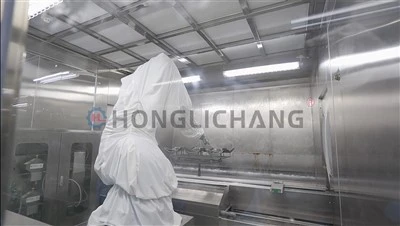
First off, let’s be real: there’s no one-size-fits-all price for a UV coating line. The cost depends on what you actually need, not what the salesman is pushing. Let’s start with the basics of what a UV coating line does—its core parts are the applicator (usually a roller, spray, or curtain coater), the UV curing chamber, a conveyor system, and control panels. But if you’re coating small batches of, say, phone cases or picture frames, that’s way different than coating 10,000 wooden doors a day.
Let’s start with the lower end of the spectrum—entry-level lines. These are for small businesses, hobbyists, or startups that don’t run 24/7, or just test out UV coating for the first time. Think: a local furniture shop testing custom finishes, or a print shop adding a UV coat to flyers and posters. Entry-level lines are usually semi-automatic, with small conveyors that move at a slow pace, and a single UV lamp chamber. What’s the price here? Between $5,000 and $25,000. Wait, that’s a big range—let me break that down. The $5k end is a compact, tabletop unit. It’s tiny, maybe 3 feet long, perfect for a small workshop. It can handle thin materials like paper, small plastic parts, or thin wood. The $25k entry-level is a floor-standing, semi-automatic line that can handle thicker materials, like small furniture parts or larger prints. It’s a step up because it has a sturdier conveyor, better UV lamps that last longer, and a control panel that lets you adjust speed and intensity. I’ve sold these to folks who just started offering UV coating as a side service—they work great for low-volume jobs, no need for a huge investment.
Next, the mid-range UV coating lines. These are for businesses that are growing, have steady orders, and need something that runs reliably 8 to 12 hours a day. Maybe a medium-sized cabinet shop, a print shop that does high-volume flyers or book covers, or a manufacturer of small automotive trim parts. Mid-range lines are fully automatic, with better conveyors that can handle a wider range of materials—from thin paper to 2-inch thick wood. They usually have 2 to 4 UV lamps, so curing is faster, which means higher throughput. The price here? Between $25,000 and $150,000. Again, the range is because of features. A $25k mid-range might be a roll-to-roll line for continuous materials, like vinyl wraps or plastic sheets. That’s perfect if you’re running long, unbroken jobs. The $150k end of mid-range is a line with a load-unload automation system—so you don’t have to manually put parts on the conveyor. It also has precision applicators: if you need a super even coat, a roller applicator with adjustable pressure will save you from having to rework parts. I had a client last year who makes custom kitchen cabinets—they upgraded from an entry-level line to a mid-range one because they were falling behind on orders. They told me the $80k mid-range line paid for itself in 6 months, because they could take on more jobs without hiring extra staff.
Now, the big-ticket items: industrial-grade UV coating lines. These are for large manufacturers, factories that run 24/7, or businesses that process tens of thousands of parts a day. Think: a big furniture brand, a print shop that does magazine runs, or a company making automotive body panels. These lines are custom-built usually, because every factory’s space and production needs are different. They have heavy-duty conveyors, multiple curing chambers (sometimes even two stages—one for initial cure, one for full cure), high-power UV lamps that last for tens of thousands of hours, and fully automated load-unload robots. The price here? Starting at $150,000 and going all the way up to $1,000,000+. I’ve sold a line like this to a company that makes outdoor patio furniture—they needed a line that could handle thick, weather-resistant wood parts, and run 24 hours a day during peak season. The line was around $700k, but they didn’t have to worry about downtime; it’s built to withstand heavy use. The $1M+ lines are for super-specific jobs, like coating large aerospace parts or floor-to-ceiling window panels. They have custom dimensions, special coating additives, and even quality inspection cameras to make sure every part has an even coat.
Wait, hold on—there are extra costs that a lot of people forget about, which make the final price way higher than the line’s base cost. Let me list those because I hate when clients get sticker shock. First, installation. A semi-automatic line might be easy to set up, but an industrial line needs a team of technicians to wire it, adjust the conveyor height to fit their factory, and test the UV lamps. That can cost anywhere from $2,000 to $20,000. Then there’s training. If you’re not used to running automated lines, you need to train your staff—some suppliers include this, but others charge $1,000 to $5,000 for a 2-day training session. Also, UV lamps themselves are a consumable—they last about 1,000 to 10,000 hours, depending on the type, and a set of lamps can be $500 to $5,000. Then there’s the coating material—different UV coatings work for different materials, and the price per gallon varies. A lot of clients ask if I can skip these, but no—you can’t run a UV line without lamps or coating, so factor that in.
Another thing that affects price: compatibility with your existing setup. If you’re already using a conveyor system, some suppliers will build a UV line that connects to yours, which is cheaper than a full standalone line. But if you need a whole new conveyor, that adds cost. Also, the type of applicator matters: spray coaters are cheaper, but they use more coating material and can have uneven coats; roller coaters are more expensive upfront but save you on coating in the long run; curtain coaters are for very wide, flat materials like large panels. I always tell clients to think about their long-term needs, not just the upfront cost. A slightly more expensive line that saves you on rework and material costs is a better bet than a cheap line that has you redoing 10% of your parts every day.
Let me also clear up a common myth: used UV lines. Some people try to save money by buying a used line, and that can work—if you know what to look for. A used entry-level line might be $2,000 to $10,000, but make sure the UV lamps are in good shape (they degrade over time, even if you don’t use them) and the conveyor isn’t broken. A used industrial line could be $50,000 to $300,000, but again, get a technician to inspect it before you buy. The downside of used lines is that they might not be compatible with newer coating materials, or have safety features that are required now (like UV guards to prevent eye damage). I’ve had a few clients buy used lines and end up paying more in repairs than they would have for a new mid-range line.
So, how do you figure out what you actually need? Let’s walk through a quick exercise. First, ask yourself: what materials will I coat? Paper, wood, plastic, metal? Second, what’s my daily production volume? 50 parts a day, 500, 5,000? Third, do I need automation, or can my staff manually load parts? If you’re a print shop doing 5,000 flyers a day, a mid-range roll-to-roll line is perfect. If you’re a furniture shop doing 100 cabinet parts a day, a semi-automatic floor-standing line works. If you’re a big factory, you need custom industrial.
I know this all sounds like a lot, but the biggest mistake I see people make is either buying way more line than they need (wasting money) or buying too little (can’t keep up with orders). If you’re not sure, my team offers free consultations—we’ll ask you about your needs, show you different lines, and give you a price breakdown that includes all extra costs. We won’t push you to buy a $1M line if a $50k mid-range line is all you need.
At the end of the day, a UV coating line is an investment in your business. The price isn’t just for the machine—it’s for faster production, better quality coats, and being able to take on more jobs. Whether you’re just starting out or ready to scale, there’s a line that fits your budget and needs.

If you’re ready to talk more about what a UV coating line would cost for your specific operation, feel free to reach out and we can walk through all the details together. No sales pitch, just honest answers.
Automatic Paint Line References:
- Industrial Coating Magazine. (2022). “UV Coating Equipment Market Trends and Pricing Analysis.”
- Small Business Administration. (2021). “Cost Considerations for Industrial Production Equipment.”
- National Association of Manufacturers. (2023). “Guide to UV Curing Systems for Small to Medium Manufacturers.”
Shenzhen Honglichang Machinery Manufacturing Co., Ltd.
We are one of the most professional uv coating line manufacturers and suppliers in China, also support customized service. Please feel free to buy advanced uv coating line for sale here from our factory. Welcome to contact us for quotation.
Address: No. A802, Building 2, Tianan Digital Plaza, Longgang, Shenzhen, China
E-mail: victor@honglichang.com
WebSite: https://www.honglichang-paint.com/
