Hey there, so you’re deep into VFD cables and wondering how they hold up against moisture—totally fair question, because if you’re running a variable frequency drive system, water damage is one of the most annoying, costly issues that can pop up. As someone who’s been in the VFD cable game for over 10 years (I’m not just some random blogger—I’m a supplier, so I’ve seen every moisture-related mess you can imagine), let’s break this down like we’re chatting over coffee, no stuffy textbook jargon that makes your eyes glaze over. VFD Cable
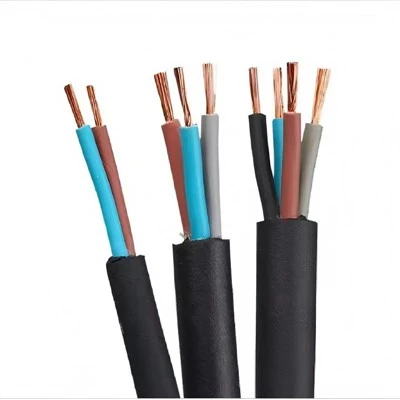
First, let’s get one thing straight: VFD cables aren’t your basic THHN wires you use for a simple lighting circuit. They’re built specifically to handle the weird, choppy power output from VFDs—you know, that pulse-width modulation (PWM) stuff that can cause premature insulation breakdown if the cable isn’t made right. But when moisture gets into the mix, it’s a whole different problem. Moisture doesn’t just “get in” either; it can seep through tiny gaps in insulation, get trapped in the cable’s core layers, or creep in through a damaged outer jacket over time. I’ve had customers call me in a panic because their VFDs were tripping breakers every time it rained, or their motors were burning out in a damp warehouse—9 times out of 10, moisture in the VFD cable was the culprit.
Let’s talk about what makes a VFD cable moisture-resistant, because not all VFD cables are created equal. The two biggest players here are the insulation material and the outer jacket, but don’t sleep on the cable’s construction. Most good VFDs use cross-linked polyethylene (XLPE) or ethylene propylene rubber (EPR) for the phase conductors’ inner insulation. Wait, why those? XLPE is cross-linked, so it has a tighter molecular structure than regular PE—water molecules are tiny, but XLPE’s bonds are super dense, so they slow water down from seeping in. EPR is even more flexible, great for outdoor or mobile setups, and it’s naturally moisture-resistant too, but it does absorb a tiny bit more than XLPE if the jacket is damaged. That’s where the outer jacket comes in.
Now the jacket is your first line of defense. You’ve got two main options for VFD cable jackets: PVC or polyurethane (PU), but also there’s chlorinated polyethylene (CPE) for heavy-duty stuff. Let’s be real, PVC is cheap, so a lot of cheap VFD cables use PVC jackets. But if you’re putting that cable in a damp area—like a food processing plant where they hose down equipment daily, or an outdoor installation where it’s exposed to rain and dew—PVC will start to break down in about 5-7 years, and once it cracks, moisture gets in fast. PU is way better here. It’s abrasion-resistant too, so it doesn’t get scratched when you’re pulling it through conduits or running it along rough walls, and it’s practically impervious to moisture. I’ve got a customer who installs VFDs on fishing boats—saltwater, constant humidity, you name it—and they’ve been using our PU-jacketed VFD cables for 8 years now, no moisture-related issues at all. The downside is PU is a bit more expensive, but if you’re not buying cheap junk, it pays for itself in less downtime.
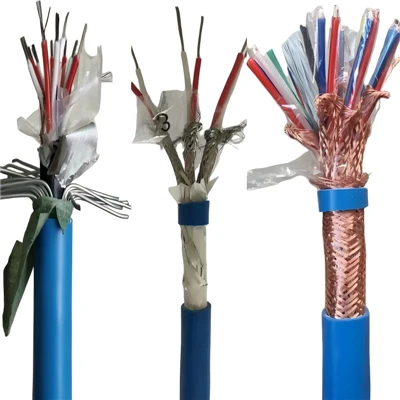
Then there’s the core construction of the cable. A lot of lower-quality VFD cables only have individual conductor insulation, no additional layers between the cores or a shield. Wait, the shield is super important for VFDs because it cuts down on electromagnetic interference (EMI), right? But the shield—usually copper tape or braid—can be a moisture entry point if it’s not properly sealed. If you’ve got a cable where the shield is just laid over the insulation with no water-blocking tape underneath, moisture can creep in between the insulation and the shield, get trapped there, and cause the insulation to break down from the inside out. That’s called “treeing,” by the way—water treeing specifically, because tiny water channels grow in the insulation under voltage, leading to short circuits. I’ve seen this happen with a bad batch of VFD cables a competitor sold us once—their shield wasn’t properly sealed, and after a year in a damp factory, half the cables had water pockets between the cores. We’ve fixed that in our own cables by adding a water-blocking polyester tape under the shield, and sometimes even water-blocking gel or yarn between the cores for extra protection. That extra step adds a tiny bit to the cost, but it saves you from replacing a whole VFD system because of a cable failure—trust me, I’ve seen how much that costs.
Now, what about real-world conditions? Let’s break down common environments and what kind of VFD cable you need: Indoor dry settings, like a climate-controlled warehouse with no hosing down—here, a basic XLPE insulation and PVC-jacketed VFD cable works fine, maybe 1/10 the moisture resistance of a PU jacket, but it’s enough. Indoor damp settings, like a meat processing plant where they wash the floors every day—you need at least CPE jacket, not cheap PVC. CPE is sturdier than PVC, resists moisture and chemicals, stands up to temperature swings too. Outdoor installations, like a rooftop VFD for an HVAC system, or a conduit running through a parking garage where it gets splashed with water—definitely PU jacket, and if it’s buried or exposed to constant moisture, you want a cable with a double jacket, right? An inner XLPE insulation, a middle layer, and an outer PU jacket, plus water-blocking fillers between cores. That’s overkill for some, but I’d rather have a customer call me and say “my cables are still working” than call me to fix a mess.
Wait, let’s address a common myth I hear all the time: “If my cable is rated for outdoor use, it’s moisture-resistant.” No, that’s not true. Outdoor rating usually means it resists UV rays, not moisture. I’ve had a customer tell me they bought “outdoor-rated” VFD cables for a water treatment plant, and within 6 months they were failing from moisture. Turns out that “outdoor rating” was just UV resistance, and their jackets were thin PVC. Don’t fall for that. Always check the cable’s specific moisture resistance specs, and ask the supplier what kind of jacket and insulation they use.
Another thing: Installation practices matter a lot, even if your cable is the best on the market. I’ve seen people install VFD cables in a conduit that has a leak, so water is just sitting around the cable 24/7, and even the most moisture-resistant cable will fail eventually. Or they leave the ends of the cable exposed after cutting it, so rain gets in the open cores. A quick tip I always give to customers: seal all cable ends with heat-shrink tubing or a waterproof connector right after cutting, and if you’re running the cable through a wall or floor, use a waterproof gland to seal the conduit opening. That’s free, and it doubles the life of your cable in damp areas.
Now, let’s talk about testing, because as a supplier, we don’t just guess at moisture resistance. We do what’s called a water immersion test—we submerge the cable in water for a set period, usually 24 hours up to 1000 hours, then test the insulation resistance. If the insulation resistance drops below a certain threshold (usually around 1000 megaohms per kilometer, for VFD cables), it fails. A lot of cheap VFD cables will pass the 24-hour test but fail the 1000-hour test, because their insulation isn’t dense enough. Our VFD cables go through 1000-hour water immersion tests before they leave our warehouse, because we want to make sure they’re going to last, even in the wettest conditions. I can’t tell you how many times a customer has come to us after buying a cheaper cable that failed a 6-month test, and our cables still work.
Wait, what about when VFD cables get wet while they’re energized? That’s a whole other risk, but the moisture resistance of the cable directly affects how much damage that causes. If your cable has a dense XLPE insulation and a sealed PU jacket, a small amount of moisture on the outside won’t seep in fast enough to cause a short circuit. But if your insulation is cheap and porous, even a little moisture can get in and cause a phase-to-phase short. I’ve had one customer who had a leaky sprinkler system hit his VFD panel, and our cables kept working without a hiccup—his old cables from another supplier burned out right away, and that cost him $15k in downtime alone. That’s the kind of stuff that makes me stand by our products.
Let’s wrap this up so you don’t have to jot down notes all day. The moisture resistance of VFD cables isn’t a one-size-fits-all number—it depends on three main things: the insulation material (XLPE is denser than EPR, which is denser than cheap PE), the outer jacket (PU is best for damp/outdoor, CPE for chemical damp, PVC only for dry indoor), and the construction features like water-blocking tape between cores and sealed shields. Also, good installation practices are just as important as the cable itself—seal those ends, fix leaky conduits, don’t leave cables exposed to the elements.
If you’re shopping for VFD cables and you’re not sure what moisture level your installation has, don’t just go for the cheapest option. Shoot me a message, tell me where you’re running the cables—indoor warehouse? Outdoor HVAC? Food processing plant? I can help you pick the right cable that won’t fail on you when you need it most. We’ve been supplying VFD cables for years, and we’ve fixed enough moisture-related messes to know exactly what works. Don’t let a bad cable ruin your VFD system, that’s the last thing you need when you’re trying to keep operations running smoothly.
Wait, just to make sure I didn’t miss anything. Oh, right—certifications! A lot of good VFD cables have certifications like UL, CSA, or IEC, which include moisture resistance testing. If a cable doesn’t have those, it’s probably not tested properly, and you’re taking a risk. Our cables are all UL-listed, so you know their moisture resistance is up to code.
Alright, that’s the lowdown on VFD cable moisture resistance from someone who actually works with these things every day, not some textbook. If you’ve got more questions, or you need a quote for a project, don’t hesitate to reach out. We’re here to help you pick the right cable that fits your needs, no fluff, no hidden fees.
High-temperature Cable References:
- IEEE Standard for Test Methods for Insulation Resistance of Electric Power Cables, IEEE Std 400-2012
- Underwriters Laboratories (UL) Standard for Flexible Cords and Cables, UL 62-2020
- National Electrical Manufacturers Association (NEMA) Standard for Variable Frequency Drive (VFD) Cables, NEMA WC 70-2018
Anhui Huawang Cable Co., Ltd.
As one of the most professional vfd cable manufacturers and suppliers in China, we also support customized service. If you’re going to buy discount vfd cable, welcome to get pricelist from our factory. Quality products and reasonable price are available.
Address: No. 32, East Street, Batian Street, Datong Town, Tianchang City, Anhui Province
E-mail: Linda@huawangcable.com
WebSite: https://www.huawang-cable.com/
