If you’ve ever stood next to a running commercial engine, felt the low, deep thrum that hums through the frame, or watched a heavy-duty truck pull away from a stop without struggling under the weight of its cargo, you’re witnessing the work of a component most of us take for granted: the engine piston. As someone who’s spent the last 12 years as an engine supplier, talking to fleet managers, heavy equipment technicians, and diesel engine designers every week, I can tell you this part isn’t just a metal cylinder moving up and down inside a cylinder bore—it’s the unsung workhorse that turns fuel into motion, and the reliability of your entire operation depends on how well it does its job. Let’s break down what the piston actually does, beyond the basic textbook definition, and why partnering with the right piston supplier makes all the difference for your business. Engine

First, let’s start with the core job that defines the piston: it converts the chemical energy of burning fuel into mechanical motion. But how does that happen step by step, in the real world, not just in a lab? Most modern internal combustion engines—whether gasoline, diesel, or natural gas—run on a four-stroke cycle, and the piston is central to every single stroke. The first stroke is intake: as the piston moves down from the top of the cylinder, it creates a vacuum that pulls a mixture of air and fuel (for gasoline engines) or only air (for diesel engines, which inject fuel later) into the cylinder through the open intake valve. Next is compression: the piston moves back up toward the top, squeezing that air-fuel mixture into a tiny space, which raises its pressure and temperature. For diesel, this compression heat is what ignites the fuel when it’s injected at the top of the stroke; for gasoline, a spark plug ignites the compressed mixture right as the piston reaches its highest point, called top dead center (TDC).
That ignition is where the magic gets physical. When the fuel burns, it expands rapidly, creating a pressure surge of thousands of pounds per square inch that slams against the top of the piston. That’s the third stroke, the power stroke, and this is where we get work done. The force from the pushing piston isn’t used directly to move a truck or a generator—instead, it transfers that force to a connecting rod, which turns that linear up-and-down motion into the rotational motion of the crankshaft. The crankshaft, in turn, sends that rotation to the transmission, wheels, or whatever piece of equipment the engine is powering. The fourth stroke is exhaust: the piston moves back up again, pushing the spent gases from the burned fuel out of the cylinder through the open exhaust valve, ready for the cycle to start all over. If the piston is misbehaving, the whole cycle breaks down—you get lost power, poor fuel efficiency, or a complete engine shutdown.
But the piston’s role doesn’t end there. It’s also the main heat exchanger in the combustion chamber, a job that’s often overlooked. When fuel burns, temperatures inside the cylinder can hit 2,500 degrees Fahrenheit—hot enough to warp metal, melt oil, or destroy engine components if that heat isn’t moved away. The piston transfers that heat from the combustion chamber to the engine’s cooling system, mostly through the cylinder liner, but also through the rings that seal the piston to the wall of the cylinder. If the piston can’t dissipate heat properly, you get what’s called piston scuffing—when the overheated piston expands too much, seizes to the cylinder wall, and causes catastrophic engine damage. That’s not just a minor repair; for a fleet manager, that’s a truck out of service for a week, a construction project delayed, thousands of dollars in lost revenue. So a good piston isn’t just strong enough to handle pressure—it’s engineered to manage heat consistently, even under heavy loads or extreme operating conditions.
Another critical, often underrated role is sealing. The piston has two or three compression rings and one or two oil control rings around its circumference. The compression rings stop the high-pressure gases from the power stroke from leaking past the piston into the crankcase, where they would mix with oil, contaminate it, and reduce the pressure pushing the piston down. The oil control rings do the opposite: they scrape excess oil off the cylinder wall so it doesn’t get burned in the combustion chamber, which would cause blue exhaust smoke, fouled spark plugs, and reduced fuel efficiency. I’ve seen firsthand how cheap, low-quality rings can ruin an engine in just a few thousand hours of operation. Last year, a small construction company came to us with a pair of excavators that were burning through oil at three times the normal rate—their previous piston supplier had used thin, poorly coated rings that wore out in 8,000 hours, instead of the 18,000 they should have. It cost them over $15,000 in lost productivity and repairs before they switched to our precision-machined rings, coated with a proprietary low-friction material that lasts two and a half times longer. That’s the kind of impact a piston’s design has, beyond just its basic function.
Now, why does this matter for you, as a fleet operator, equipment manager, or engine buyer? Let’s talk about the real-world stakes, not just engineering specs. A piston failure doesn’t just mean replacing a part—it means downtime, which is the single biggest expense for any business that relies on engines. For a long-haul trucker, one day of downtime can mean missing a delivery window, paying late fees, or losing a contract. For a mining operation, a diesel engine powering a haul truck that goes down can bring an entire site’s production to a halt. That’s why, when you’re choosing engine components, the piston isn’t a part to cut corners on. It has to be engineered for your specific application, not just a one-size-fits-all part from a mass-produced catalog.
For example, a piston for a light-duty pickup truck that only hauls cargo occasionally doesn’t need the same durability as a piston for a heavy-duty garbage truck that starts and stops hundreds of times a day, or a generator that runs 24/7 in a power plant. At our supplier business, we don’t just sell pistons—we work with our customers to match the right piston design to their use case. We offer forged aluminum pistons for high-performance gasoline engines, which are lightweight and handle high revs, and cast iron or steel pistons for heavy-duty diesel engines, which need to handle consistent high pressure and high heat over long periods. We also offer custom coatings for customers operating in extreme environments—like arctic fleets that run in sub-zero temperatures, or off-road equipment that’s exposed to dust and debris. A piston that’s built for consistent, on-road highway use won’t hold up to the rough, dusty conditions of a construction site, and vice versa.
I want to be clear: not all piston suppliers are the same. A lot of big brands will sell you a generic piston that fits your engine model, but that piston might not be optimized for the demands of your operation. Last year, we had a customer who ran a fleet of delivery vans that spent most of their time idling in city traffic, making short stops and starts. The generic pistons they were buying from a big box auto parts store were designed for highway driving, where the engine runs at a steady speed. After six months, their pistons were developing carbon buildup on the crown, because the consistent low rev idling wasn’t burning off the unburned fuel that collects on the piston. We worked with them to switch to a piston with a deeper bowl design in the combustion chamber, which mixed the fuel and air better during low-rev operation, reducing carbon buildup by 70%. That small change cut their maintenance costs by $4,000 a year per van, and increased their fuel efficiency by 4%. That’s the kind of value you get when you work with a piston supplier that understands the actual use of your equipment, not just the part number.
Another point that’s often missed is long-term reliability and compatibility. A piston isn’t just a wear part—it’s a core component that works with the connecting rods, crankshaft, and cylinder liners. If you replace a piston with a part that’s not machined to the same tight tolerances as the original, you can throw off the balance of the engine, leading to vibration, increased wear on other parts, and early engine failure. At our facility, every piston we produce is machined to tolerances of less than 0.001 inches—about the thickness of a human hair. That precision isn’t just a technical detail; it means the piston fits perfectly in the cylinder, seals correctly, and runs smoothly, reducing stress on the entire engine. We also test every batch of pistons under real operating conditions, simulating thousands of hours of use in a test engine running at full load, before they ever leave our warehouse. That way, our customers know that when they install a piston from us, it’s going to perform as promised, without unexpected failures.
Let’s talk about the future, too. Engines are evolving to meet stricter emissions standards, which means pistons have to evolve too. New diesel and gasoline engines are running at higher pressures and higher temperatures to reduce fuel use and cut emissions, which puts more stress on pistons than ever before. We’ve invested heavily in research over the last five years to develop pistons that can handle these new demands, with advanced alloy materials that have higher heat resistance, and new ring designs that reduce oil consumption and emissions. For example, our latest line of low-emission pistons have a thermal barrier coating on the top crown that reduces heat loss, so more of the fuel’s energy goes into powering the vehicle, instead of escaping as heat through the cylinder wall. That’s a win for both fuel efficiency and emissions, which helps our customers meet regulatory requirements without sacrificing performance.
At the end of the day, the piston’s role is simple but indispensable: it’s the engine’s power generator, heat regulator, and seal all in one. It’s the part that turns fuel into work, and every part of your operation depends on it working right. If you’re having issues with power loss, poor fuel efficiency, oil consumption, or unexpected engine downtime, the piston is almost always a place to start. Choosing the right piston isn’t just about fixing a problem—it’s about building reliability into your operation, so you can keep your trucks, equipment, and generators running when you need them.
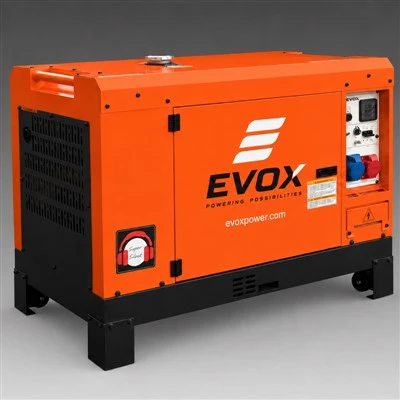
If you’re tired of dealing with piston failures that cost you time and money, or if you’re upgrading your engine and need components that are built for your specific use, I’d be happy to connect with you to discuss your needs. We work with fleets, construction companies, power generators, and equipment operators of all sizes, and we don’t sell one-size-fits-all parts—we build solutions that fit your operation. Let’s chat about how our pistons can help you reduce downtime, lower maintenance costs, and keep your engines running stronger for longer.
Diesel Open Frame Generator References
Internal Combustion Engine Fundamentals, Heywood, J.B.
Automotive Engine Piston Design and Materials, Society of Automotive Engineers (SAE) International
Heavy-Duty Diesel Engine Component Reliability, American Trucking Associations Technology & Maintenance Council
Evoxpower Technology
Evoxpower Technology is one of the most professional engine manufacturers and suppliers in China, featured by quality products and good service. Please rest assured to buy the newest engine in stock here and get pricelist from our factory. Contact us for customized service and OEM service.
Address: 11 Fortune Avenue, Yubei District, Chongqing, China
E-mail: stephen@allrightpower.com
WebSite: https://www.evoxpower.com/
