As someone who’s spent the better part of two decades designing, manufacturing, and installing electric industrial kilns for metallurgical, ceramic, and advanced materials applications, I can tell you that one of the most frequent questions I get from first-time buyers is: “What are the exact installation dimensions I need to plan for?” It’s no small wonder—get these dimensions wrong, and you’re looking at costly delays, last-minute modifications to your facility, or even a kiln that can’t fit through the loading dock or around a production floor corner. I’ve seen it happen more times than I care to count: a small fabrication shop waits three months for a custom kiln, only to realize it’s two inches too wide to fit through their main entrance, or a mid-sized auto parts manufacturer has to rearrange their entire production line because the kiln’s required clearance is double what their floor plan allowed. That’s why today, I’m breaking down every critical installation dimension you need to know, straight from an industrial kiln supplier who’s navigated these headaches with hundreds of clients. Electric Industrial Kiln
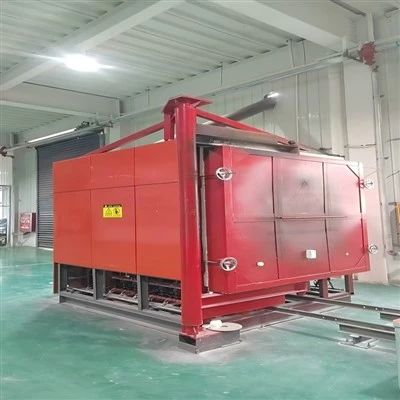
First, let’s start with the core: electric industrial kilns aren’t one-size-fits-all. The installation dimensions you’ll need depend entirely on two key factors: the kiln’s primary function and its maximum internal volume. For example, a small batch kiln used to fire ceramic dental crowns will have drastically different requirements than a large continuous kiln used to sinter aluminum oxide for aerospace components. Even so, there’s a baseline set of dimensions that apply to every electric industrial kiln, plus a handful of site-specific measurements that can make or break your install. Let’s walk through them one by one, starting with the kiln itself, then moving to clearance, utilities, and auxiliary space.
First, the overall external dimensions of the kiln. This is the non-negotiable number that tells you if it will fit through your door, down a hallway, or in your pre-planned production bay. I always emphasize to clients that these aren’t just the internal chamber dimensions—they include the kiln’s outer shell, heating elements, insulation, control panels, and any integrated components like exhaust manifolds or gas analyzers. For reference, let’s use common kiln types to give you real-world numbers, not just generic specs. A table-top electric kiln for R&D labs might have external dimensions of 24” W x 30” D x 36” H, with an internal chamber of 12” W x 18” D x 18” H. A medium batch kiln for small to mid-sized ceramic or metallurgical runs, which we supply regularly, typically has external dimensions ranging from 60” W x 72” D x 84” H up to 120” W x 144” D x 108” H, with internal chambers from 30 cubic feet up to 250 cubic feet. For large continuous industrial kilns, used for high-volume production like electronic component sintering or lithium battery electrode processing, external dimensions can stretch to 30’ W x 80’ D x 12’ H, with internal chamber lengths of 50’ or more. The key here: never use internal chamber dimensions to plan your entrance or floor space. That’s the #1 mistake new buyers make. They see a 30” wide chamber and assume the kiln is 30” wide, only to find out the outer shell plus insulation is another 15” on each side. That adds up to 60” total width—so if your entrance is only 58” wide, you’re stuck.
Next, the non-negotiable clearance dimensions, which are just as important as the kiln’s size. There are two types of clearance you need to plan for: operational clearance and maintenance clearance. Let’s start with operational clearance. Every electric industrial kiln needs space around it for two main things: air circulation to keep the control system and heating components from overheating, and access for loading and unloading materials. For standard batch kilns, we recommend a minimum of 18” of clearance on all sides. Wait—all sides, not just the front. I’ve had clients try to skimp on clearance by shoving a kiln up against a wall, only to deal with overheating control panels within the first month of operation. Heating elements run at extreme temperatures (up to 3,000°F for our high-temperature models), and the control system requires consistent ambient air flow to regulate temperature accurately. If you block air flow, you’ll get hot spots in the kiln chamber, which ruins every batch of materials you process. For our large continuous kilns, that clearance jumps to 36” on all sides, plus an additional 6’ of clearance along the entire length of the kiln’s exit and entrance ends for automated loading and unloading systems. That’s a non-negotiable—we design continuous kilns to integrate with robotic arms or conveyor belts, and those systems need room to move materials without collision.
Then there’s maintenance clearance, which is even more critical over the kiln’s 15–25 year lifespan. Electric industrial kilns have components that need regular servicing: heating elements that burn out, insulation that can degrade over time, control wiring that needs inspection, and exhaust systems that need cleaning. For the sides and back of the kiln, we always recommend a minimum of 36” of maintenance clearance, especially around the area where the heating elements are housed. That might seem like a lot, but when a heating element needs to be replaced, you’ll need enough space to pull the old element out, lift a new one in, and connect the wiring—often without moving the entire kiln. For the front of batch kilns, where the door and control panel are located, we recommend 48” of clearance. That gives operators enough space to load parts, access the touchscreen control panel, and handle any emergency shutoff procedures without feeling cramped. I once worked with a metal parts fabricator who tried to get away with 24” of front clearance for a batch kiln. When their main heating element failed, their maintenance crew couldn’t fit their specialized lift tool to remove it, so they had to cut a section of the kiln’s outer shell at a cost of over $12,000 and two weeks of downtime. That’s a cost they’ll never forget, and it’s exactly why we emphasize maintenance clearance so strongly.
Beyond the space around the kiln itself, you need to factor in site-specific dimensions like floor loading capacity and utility access. Wait a second—you could have a kiln that fits through your door and has enough clearance around it, but if the floor under it can’t support its weight, that’s another problem. Electric industrial kilns are heavy—really heavy. A medium batch kiln with 100 cubic feet of internal volume can weigh anywhere from 15,000 to 25,000 pounds, and large continuous kilns can weigh over 100,000 pounds when fully insulated and equipped. Most standard industrial floors are rated for 150 to 250 pounds per square foot, but when you have a concentrated load like a kiln, you need to calculate the load per square inch of the kiln’s base. For example, a 20,000-pound kiln sitting on a base that’s 4’ x 6’ has a load of approximately 833 pounds per square foot, which is well within the range of most industrial floors. But if you have a kiln with a narrow base, or if your floor is older concrete that wasn’t reinforced for heavy equipment, you might need to add support beams or a reinforced slab under the kiln. We always advise clients to hire a structural engineer to test their floor’s capacity before the kiln is delivered, and we provide detailed weight and base dimension data for every kiln we manufacture—no guesswork required.
Then there’s utility access, which has its own set of hidden dimensions. Electric industrial kilns run on high-voltage power, usually 480V three-phase power for medium and large models, and sometimes higher for high-temperature applications. That means you need a dedicated power line running to the kiln’s location, with a disconnect switch within 10 feet of the kiln for safety. We provide clients with exact power inlet dimensions and placement during the design phase, so they can run conduit and wiring before the kiln arrives—no last-minute construction. We also need access for exhaust systems, because firing materials at high temperatures produces fumes, dust, and volatile organic compounds that need to be vented outside. The exhaust port on our kilns is usually located on the top or back of the shell, and we provide specific diameter and height requirements for the exhaust ductwork, plus recommendations for fan size to maintain proper airflow. If you get the exhaust dimensions wrong, you’ll get pressure buildup inside the kiln, which can cause doors to leak or fumes to escape into your facility.
Wait, I should also mention custom kilns, because that’s what most of our clients order. No two industrial kiln applications are exactly the same, so we often build custom units to fit specific facility constraints. For example, we recently worked with a pharmaceutical company that needed a kiln to fit in a narrow aisle between two production lines, with only 12” of space on one side. Instead of forcing them to rearrange their entire facility, we designed a kiln with the control panel and heating element access on the opposite side of the narrow aisle, so they only needed 18” of clearance on the side with the wall. That’s the beauty of custom dimensioning—we don’t just sell a standard size and send it your way; we work with your facility layout to design a kiln that fits your space, not the other way around. But even with custom kilns, we still follow the core rules of clearance for operation and maintenance, so you don’t sacrifice performance for size.
I know this can feel overwhelming, especially if you’re planning an industrial kiln installation for the first time. That’s why we take the guesswork out of the process for our clients. When you reach out to us, we’ll send a detailed site assessment questionnaire that asks for your facility’s entrance dimensions, floor capacity, utility access points, production line layout, and application details. We use that information to generate a custom dimension plan for your kiln, including external size, clearance requirements, utility placement, and even loading instructions if you need to transport the kiln to your facility. We also provide 3D models of every kiln design, so you can drop it into your existing floor plan and test fit it before any fabrication begins. That’s a small step that saves our clients thousands of dollars in avoidable mistakes.
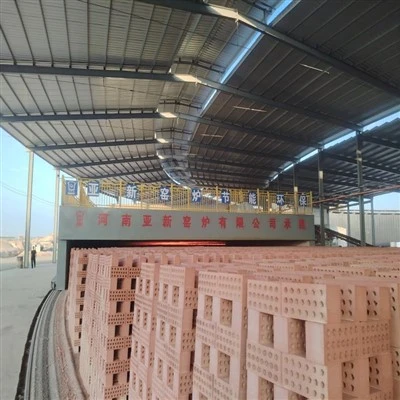
Let me circle back to the opening story I shared, because it’s a reminder of why this work matters. That small fabrication shop that had a kiln too wide for their door? They called us a year later to replace that undersized unit with a custom kiln that fit their space, and we worked with their team to measure their entrance, hallway, and production bay down to the quarter-inch, so there were no surprises. They’ve been using that kiln for three years now, with zero operational issues, because we got the dimensions right from the start. That’s the standard we hold ourselves to as an electric industrial kiln supplier: every client, every kiln, every dimension is tailored to their needs, so they can focus on what they do best—making high-quality products—without worrying about their kiln failing because of a bad fit.
Circular Tunnel Kiln If you’re planning to invest in an electric industrial kiln, don’t leave your installation to chance. The dimensions are the foundation of every successful kiln setup, and getting them right will save you time, money, and frustration for decades to come. We’re here to guide you through every step, from initial dimension planning to final installation, so your kiln works as hard as you need it to, in the space you have available. Reach out to us to discuss your project, and we’ll provide you with a detailed custom dimension plan for your electric industrial kiln, no strings attached.
References
- Industrial Kiln and Furnace Association. (2022). "Standard Installation Guidelines for Electric Industrial Kilns and Furnaces." IKFA Technical Report Series.
- National Fire Protection Association. (2021). "NFPA 86: Standard for Ovens and Furnaces." National Fire Protection Association.
- American Society of Mechanical Engineers. (2020). "ASME Boiler and Pressure Vessel Code, Section VIII: Rules for Construction of Pressure Vessels, Appendices." ASME International.
- World Steel Association. (2019). "Guidelines for Floor Load Capacity for Industrial Heavy Equipment." World Steel Technical Briefs.
Henan Yaxin Kiln Co., Ltd.
Henan Yaxin Kiln Co., Ltd. is one of the most professional electric industrial kiln manufacturers and suppliers in China. With abundant experience, we warmly welcome you to buy high quality electric industrial kiln with the latest design from our factory. Good service and punctual delivery are available.
Address: Jixian Industrial Zone, Shangqiu City, Henan Province
E-mail: 1543563178@qq.com
WebSite: https://www.hnyxkiln.com/
