Hey everyone, it’s Jake from your go-to high voltage cable team. Today I want to cut through the jargon and talk about something that keeps popping up in our inbox: the most common failures of high voltage cables. As someone who’s been in this game for 8 years, I’ve seen firsthand how these issues sneak up on projects big and small—from solar farms to downtown skyscraper electrical rooms. Most failures aren’t random acts of nature; they’re preventable missteps that happen way before you even unroll the cable. Let’s break down the big ones, no fancy stuff, just real talk. High Voltage Cable

First up: insulation degradation. This is the OG failure mode, like the chronic back pain of the cable world. Insulation is what keeps the high-voltage current from jumping to anything it shouldn’t—ground, metal pipes, even another cable. Over time, it breaks down from three main things. Number one is thermal stress. Cables run hot, especially when they’re buried underground or run in tight conduit where air can’t circulate. If the ampacity (that’s the max current a cable can handle) is pushed too hard for too long, the insulation’s polymer chains start to break apart. I’ve seen a 10kV cable on a construction site get overloaded for 6 months because the team sized it wrong—by the time we got called, the insulation was brittle enough to crack with a screwdriver. Number two is moisture intrusion. If the cable’s outer jacket gets a nick during installation, water seeps in and eats away at the insulation, creating little weak spots called water trees. These tiny, tree-shaped cavities grow over time and eventually turn into electrical trees that cause short circuits. Number three is chemical exposure. Cables buried near industrial sites or saltwater areas are way more at risk—salt, acids, and even common fertilizers eat through insulation and jackets way faster than normal soil. A lot of projects skip pre-installation soil testing, and that’s where the mess starts.
Next, let’s talk about installation damage. This is the most preventable failure, but it happens way too often. Installers are in a rush, and they don’t have the right tools or know-how. The big ones here are cuts and abrasions during pulling. If you yank a cable too hard around a sharp concrete edge or a rusty pipe, you nick the outer jacket and sometimes the insulation under it. One time we got a call from a data center that lost power during a peak—turns out their electrician pulled a 35kV cable through a metal conduit that had a burr sticking out. The nick wasn’t obvious until the cable warmed up, and it shorted out 8 hours later. Another big installation fail is improper bending. Every cable has a minimum bend radius—if you bend it tighter than that, the insulation and conductors get stretched unevenly. The outer conductors can crack, and the insulation gets thin enough to break down. I once heard of a solar farm where the installers bent 10kV inter-array cables around a 1-foot pole when the minimum was 2 feet—within a year, 12 cables had to be replaced because of insulation cracks. Tension overload is another one: pulling a cable with a winch that’s too strong can snap the conductors or tear the jacket from the core. Most people don’t realize that high voltage cables are actually pretty flexible, but they have limits—push past them, and you’re asking for trouble.
Then there’s joint and termination failure. This is the quiet killer because it often hides under insulation or in junction boxes until it’s too late. Joints are where two cables connect, and terminations are where a cable connects to a transformer or switchgear. The problem starts with bad installation here—if you don’t clean the conductors properly before crimping, or you use the wrong type of lubricant, you get loose connections or high resistance. High resistance means heat builds up, which melts the joint or termination, leading to an arc or short circuit. I saw a municipal substation go down because a termination was installed with the wrong torque on the bolts—over 2 years, the connection worked itself loose, got hot, and burned through the surrounding cabinet. Another joint issue is moisture getting trapped inside the joint. If you don’t seal the joint properly during installation, water gets in and causes water treeing just like it does in buried cables. The worst part? Joint and termination failures are usually localized, so they take way longer to find and fix than a full cable replacement—costing projects tens of thousands in downtime.
Corrosion and sheath damage are next, especially for buried or subsea cables. The outer sheath isn’t just there to protect the insulation—it’s also a ground conductor for the cable system. If the sheath corrodes, you get two problems: first, the insulation is no longer fully protected from moisture or chemicals, and second, you lose your grounding path, which can cause dangerous voltage buildup on the cable’s surface. Corrosion happens from stray current—like from nearby electrical pipelines or rail systems. If the soil has high salinity or acidity, it speeds up corrosion too. We did a job a few years back on a highway expansion where the new high voltage parallel to an old rail line had sheath corrosion within 3 years because of stray current from the rail’s return system. They had to replace the entire cable run because the sheath had eaten through in 17 different spots. Subsea cables have it even worse—they get damaged by fishing nets, anchor drag, and seabed movement. A lot of subsea projects use extra heavy jackets, but if they skimp on that to save money, you end up with a cable that tears the first time a boat drops an anchor.
And let’s not forget about overvoltage events, both temporary and transient. Surges and spikes in voltage can fry a cable even if it’s installed right. Lightning strikes are the big one—if a lightning bolt hits a power line near your cable, it sends a huge surge that blows through the insulation. Switching surges are another common cause—when a big transformer or generator gets turned on or off, it creates a voltage spike that can damage cable insulation over time. We’ve seen cases where a industrial plant that switches their big motors on and off 10 times a day had a 15kV cable fail after 5 years of surges eating away at the insulation. The solution here isn’t just better cables—it’s adding surge protectors at terminations, but a lot of projects skip that to cut costs. The other overvoltage issue is ground fault overvoltage, which happens when a ground fault on one phase causes voltage to spike on the others. That’s a big problem for ungrounded high voltage systems, and it can cause multiple cable failures at once if it’s not caught early.
Now, I want to be clear: not all of these failures are the cable’s fault. We make top-tier cables that meet or exceed all industry standards, but even the best cable can fail if it’s installed wrong, used in the wrong environment, or not maintained. That’s why our team doesn’t just sell you a cable and dip—we help with site assessments, installation guides, and post-installation support. We’ve seen projects save 30% on failure costs just by getting a soil test before installation, and having our techs check the bend radii during install.
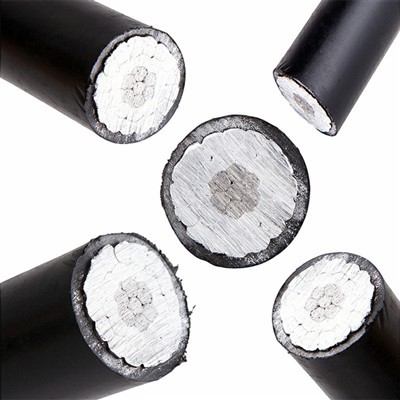
If you’re dealing with cable failures, planning a new project, or just want to make sure your existing cables are safe, hit us up. We don’t do pushy sales—we do honest, practical advice. We’ve helped everyone from small solar installers to big utility companies fix their cable issues, and we can help you too. Don’t wait until you lose power mid-project or have to pay for downtime—reach out, and let’s get your cables running smooth.
Power Transmission Cable References:
- IEEE Std. 400-2012, "IEEE Guide for the Field Testing and Evaluation of Shielded Power Cable Systems Rated 5 kV and Above"
- International Electrotechnical Commission (IEC) 60840, "Power cables with extruded insulation and their accessories for rated voltages above 30 kV (Um = 36 kV) up to 150 kV (Um = 170 kV) – Test methods and requirements"
- Cable failure statistics report, Electrical Power Research Institute (EPRI), 2021
Address: XINGBIEYING INDUSTRIAL ZONE, HEBEI PROVINCE CHINA
E-mail: steven@hualunchcable.com
WebSite: https://www.hualuncables.com/
