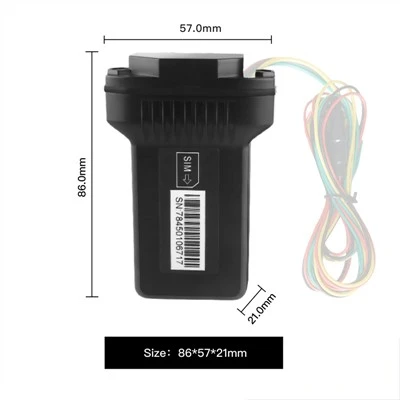
GPS trackers have become an indispensable tool in our modern lives, finding applications in various fields such as vehicle tracking, asset management, and personal safety. However, a common question that often arises is whether GPS trackers work indoors. As a GPS tracker supplier, I’ve encountered this query numerous times from customers, and in this blog, I’ll delve into the science behind GPS technology, explain the challenges of indoor tracking, and explore the solutions available to make indoor tracking possible. GPS Tracker
Understanding GPS Technology
To understand why GPS trackers may face challenges indoors, it’s essential to understand how GPS technology works. GPS, or Global Positioning System, is a satellite-based navigation system that provides location and time information in all weather conditions, anywhere on or near the Earth where there is an unobstructed line of sight to four or more GPS satellites.
The GPS system consists of a constellation of at least 24 satellites orbiting the Earth, ground control stations, and GPS receivers. The satellites continuously transmit signals that contain information about their location and the time the signal was sent. The GPS receiver on the ground picks up these signals from multiple satellites and uses the time difference between the transmission and reception of the signals to calculate the distance to each satellite. By triangulating the distances from at least four satellites, the receiver can determine its precise location (latitude, longitude, and altitude) and the current time.
Challenges of GPS Tracking Indoors
The key requirement for a GPS tracker to function accurately is an unobstructed line of sight to multiple GPS satellites. However, indoors, several factors can block or weaken the signals from the satellites, making it difficult for the GPS tracker to receive a sufficient number of signals to calculate its location.
- Building Materials: Buildings are typically constructed using materials such as concrete, steel, and brick, which can block or absorb GPS signals. These materials act as barriers, preventing the signals from reaching the GPS tracker inside the building.
- Signal Attenuation: As GPS signals travel through the atmosphere and penetrate buildings, they experience attenuation, which is the reduction in signal strength. The thicker the walls and the more floors the signals have to pass through, the greater the attenuation, and the weaker the signals received by the GPS tracker.
- Multipath Interference: Inside buildings, GPS signals can bounce off walls, floors, and other objects, creating multiple paths for the signals to reach the GPS tracker. This phenomenon is known as multipath interference. When the signals arrive at the receiver via different paths, they can interfere with each other, causing errors in the measurement of the signal arrival time and, consequently, errors in the calculated location.
Does GPS Work Indoors?
Given the challenges mentioned above, GPS trackers generally do not work well indoors. In most cases, the GPS tracker will either be unable to acquire a signal at all or will provide inaccurate location information due to the weak and unreliable signals received. However, the performance of a GPS tracker indoors can vary depending on several factors, such as the type of building, the location within the building, and the quality of the GPS tracker.
- Type of Building: Buildings with large windows or made of materials that allow GPS signals to pass through more easily, such as glass or wood, may provide better GPS reception indoors. On the other hand, buildings with thick concrete walls, multiple floors, or underground structures are more likely to block GPS signals and make indoor tracking difficult.
- Location within the Building: The location of the GPS tracker within the building can also affect its performance. Areas near windows or on the upper floors of a building are more likely to receive stronger GPS signals than areas deep inside the building or on lower floors.
- Quality of the GPS Tracker: The quality of the GPS tracker itself can also play a role in its indoor performance. High-quality GPS trackers with more sensitive receivers and advanced signal processing algorithms are generally better able to acquire and track GPS signals in challenging environments, including indoors.
Solutions for Indoor Tracking
While GPS trackers may not work well indoors on their own, there are several technologies and solutions available that can be used in conjunction with GPS tracking to provide accurate indoor location information.
- Wi-Fi Positioning System (WPS): Wi-Fi positioning system is a technology that uses the Wi-Fi access points in a building to determine the location of a device. Most modern smartphones and GPS trackers are equipped with Wi-Fi capabilities, allowing them to scan for nearby Wi-Fi access points and send the information to a server. The server then uses a database of Wi-Fi access point locations to estimate the device’s location based on the signal strength of the access points.
- Bluetooth Low Energy (BLE) Beacons: BLE beacons are small, low-power wireless devices that transmit Bluetooth signals. By placing BLE beacons at strategic locations throughout a building, it is possible to create a indoor positioning system. A GPS tracker or mobile device equipped with a Bluetooth receiver can detect the signals from the beacons and use the signal strength to calculate its distance from each beacon. By triangulating the distances from multiple beacons, the device can determine its location within the building.
- Ultra-Wideband (UWB) Technology: Ultra-wideband is a wireless technology that uses a wide range of frequencies to transmit data. UWB technology provides very accurate location information, making it suitable for indoor tracking applications. UWB tags can be attached to assets or people, and UWB anchors can be installed in the building to track the tags’ locations in real-time.
Applications of Indoor Tracking
Indoor tracking technology has a wide range of applications in various industries, including healthcare, retail, logistics, and security.
- Healthcare: In healthcare facilities, indoor tracking can be used to monitor the location of patients, staff, and medical equipment. This can help improve patient safety, streamline operations, and reduce the time and effort required to locate missing items.
- Retail: In retail stores, indoor tracking can be used to analyze customer behavior, such as the areas of the store that customers visit most frequently, the products they look at, and the time they spend in the store. This information can be used to optimize store layout, improve product placement, and personalize the shopping experience.
- Logistics: In warehouses and distribution centers, indoor tracking can be used to track the movement of inventory, pallets, and forklifts. This can help improve inventory management, reduce the time and cost of order fulfillment, and prevent loss and theft.
- Security: In commercial buildings and public spaces, indoor tracking can be used to monitor the movement of people and vehicles, detect unauthorized access, and respond quickly to security incidents.
Conclusion
In conclusion, GPS trackers generally do not work well indoors due to the challenges posed by building materials, signal attenuation, and multipath interference. However, there are several technologies and solutions available, such as Wi-Fi positioning system, BLE beacons, and UWB technology, that can be used in conjunction with GPS tracking to provide accurate indoor location information. As a GPS tracker supplier, we offer a range of indoor tracking solutions that can be customized to meet the specific needs of our customers.
GPS Tracker If you’re interested in learning more about our GPS trackers or indoor tracking solutions, we’d love to hear from you. Contact us today to discuss your requirements and explore how we can help you improve your operations and enhance your security with our state-of-the-art tracking technology.
References
- Parkinson, B. W., & Spilker, J. J. (1996). Global Positioning System: Theory and Applications. American Institute of Aeronautics and Astronautics.
- Dardari, D., Conti, A., & Ferner, U. (2015). Indoor Geolocation Science and Technology. Artech House.
- Rizos, C., & Han, S. (2018). GNSS for Land, Sea, and Air Applications. Springer.
Shenzhen Xuneng Chuangxiang Technology Co., Ltd.
Shenzhen Xuneng Chuangxiang Technology Co., Ltd. is one of the most professional GPS tracker manufacturers and suppliers in China, featured by quality products and good service. Please rest assured to buy bulk customized GPS tracker made in China here from our factory. For price consultation, contact us.
Address: Room 515, Fuxiang Building, No.1 Wenming Road, East Zone, Baishixia Community, Fuyong Subdistrict, Bao’an District, Shenzhen City
E-mail: xn.sungang@gmail.com
WebSite: https://www.szxunneng.com/
