If you’ve ever sipped a crisp, clear craft beer at a backyard cookout or a local brewery taproom, you might not have thought about the tiny, game-changing parts that turn cloudy, slightly yeasty wort into that perfectly smooth brew you’re holding. As someone who’s spent the last 8 years selling microfiltration cassettes to breweries big and small—from nano-brews with 3-barrel systems to regional operations cranking out 100k barrels a year—let me tell you: these unassuming little devices aren’t just another piece of brewing gear. They’re the difference between a beer that sells out in 48 hours and one that’s sitting on warehouse shelves because it’s hazy, off-flavored, or unstable. Microfiltration Cassettes
First, let’s cut through the jargon a little, because I know most brewers don’t get into this stuff to pore over membrane specs. When you’re done fermenting beer, you’ve got a slurry, right? It’s loaded with yeast cells (some alive, some dead), residual grain particles, hop debris, and those tiny little protein fragments that make beer look cloudy. Before microfiltration came along, breweries had a limited handful of options to fix this: they could let gravity and time do all the work (that’s called “racking to bright beer tank and waiting” or just “lagering,” which takes weeks or months), or they could use older, clunky filtration systems like plate-and-frame filters. The problem with those old systems? Plate-and-frame uses filter aid—usually diatomaceous earth (DE) perlite—that you have to mix in, then dispose of later. DE is messy, it’s a pain to handle, and if you’re trying to market your beer as “natural” or “no additives,” that’s a big no-no. Plus, plate-and-frame isn’t super precise. You might filter out the big grain chunks, but those tiny, 0.5 to 10 micron particles (yeast cells are about 5 microns, right?) can slip through, leaving you with a beer that might look fine on day 1 but gets hazy after a week on store shelves.
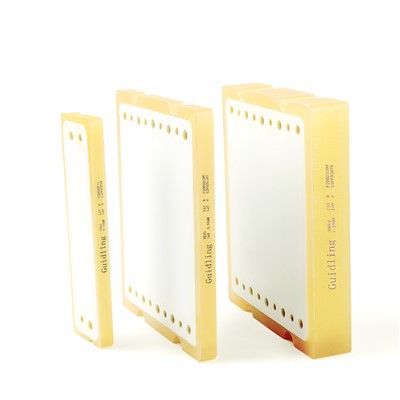
That’s where microfiltration cassettes come in. Let’s keep the science simple here, because I don’t want to lose anyone. A microfiltration cassette is basically a stack of flat membrane sheets (usually made of polypropylene, which is food-safe and durable) separated by spacers. Wort or beer is pumped through the cassette, and the membrane has tiny, uniform pores—usually between 0.1 and 10 microns— that let the clear beer pass through, but trap all the stuff you don’t want. It’s not like straining pasta with a colander; it’s more like using a super fine sieve that only lets the liquid (and not the solid bits) through. And unlike DE, microfiltration cassettes don’t require any filter aid. That’s a huge win for brewers who want to keep their ingredient lists clean, and it cuts down on waste too—no more hauling away barrels of used DE to the landfill, and way less water used for rinsing and cleaning between batches.
Wait, but let’s get specific about what exactly microfiltration cassettes do in a typical brewery workflow, because I’ve heard so many brewers mix them up with other types of filtration (like ultrafiltration or reverse osmosis, which are for water treatment, not finishing beer). Let’s walk through a standard lager process, since that’s where I see most of our cassettes used, but they work for ales too. After fermentation, you cool the beer to around 32-40°F to let the yeast flocculate (clump together) and settle at the bottom of the fermenter. The first step is usually a rough pre-filtration with a smaller, coarser filter (like 10 micron) to get rid of the big, heavy yeast chunks and hop residue. But then you’ve got that fine haze-causing stuff left, right? That’s when you run it through our microfiltration cassettes. The pores on our standard brewing cassettes are 0.45 microns—small enough to trap all remaining yeast cells, protein fragments, and tiny grain particles, but big enough to let the beer’s flavor compounds pass through. So you don’t lose that fruity ester or that hop bitterness; you just get rid of the stuff that makes it cloudy.
Here’s the thing that surprises a lot of new brewers: microfiltration cassettes don’t just make beer clearer. They also improve stability. When yeast cells are left in packaged beer, they’re still alive, right? So if you leave a bottle on a store shelf for a month, those yeast cells will start to metabolize any residual sugar, creating off-flavors (think soapy or yeasty) and even carbonation buildup in the bottle. Our cassettes trap 99.9% of yeast, so your beer stays flat (as intended) and fresh for months, not weeks. We had a craft brewery in Ohio switch from plate-and-frame to our cassettes about 2 years ago, and they told us their shelf life went from 2 weeks to 12 months. That’s a game-changer for them because they can now distribute to retailers across the Midwest, not just within 50 miles of their taproom.
Another big win for brewers is speed. I talked earlier about lagering, which can take 4-6 weeks for a lager to clear on its own. With microfiltration, that same lager is clear and ready for packaging in 2-3 days. That cuts down on tank time, which is huge for breweries that are cranking out as much beer as they can. Tank space is one of the most valuable resources in a brewery, right? If you can free up a fermenter or bright beer tank in 3 days instead of 4 weeks, you can make 8 more batches a year. For a brewery that makes $500k a year in sales, that’s an extra $100k in revenue easily. I’ve had brewers tell me that switching to our cassettes paid for the entire system in less than a year, just from saved tank space and reduced waste disposal costs.
Now, let’s be real—microfiltration cassettes aren’t perfect, and they’re not for every brewery. If you’re a nano-brewery making 5 barrels a week out of a garage, you probably don’t need one. A 10 micron bag filter, or even letting it naturally clarify, is way more cost-effective for small batches. But if you’re a brewery making 20+ barrels a week, or if you want to start distributing beyond your local area, cassettes are worth every penny. The key is picking the right pore size for your beer. For most lagers, 0.45 microns works great. For hazy IPAs (which are super popular right now, even though they’re cloudy), some brewers use a 1.2 micron cassette so they don’t filter out the tiny hop particles that make an IPA taste bright and juicy. I always tell brewers: don’t buy the biggest pore size, don’t buy the smallest one. Talk to us, we’ll help you figure out what works for your recipe and your production goals.
Also, maintenance is way easier than people think. A lot of brewers hear “membrane filter” and think it’s going to be a pain to clean, but our cassettes are designed with CIP (clean-in-place) compatibility, which means you can sanitize them with caustic and acid solutions right in the system, no need to take them apart every time. Each cassette can be used for 50-100 batches, depending on how well you maintain it, and replacing them is way cheaper than buying new plate-and-frame filter media every month. We had a brewery in Texas that was going through 50 lbs of DE a week, costing them $200 a week. Switching to our cassettes cut their filtration costs by 75% and their cleaning time by half.
Wait, let’s also touch on quality control, because that’s something brewers care about more than anything. With microfiltration cassettes, you get consistent results every single time. Plate-and-frame filters can vary a lot depending on how thick you spread the DE, how evenly you load the frames, and how much pressure you use. One batch might be crystal clear, the next might be a little hazy because the media got uneven. Cassettes? They have uniform pores, so every batch is filtered the same way, every single time. That means your beer tastes the same, looks the same, from batch 1 to batch 100. No more guessing if your filtration is working, no more throwing out a batch because it’s hazy after packaging.
I mentioned earlier that I’m a supplier, not some corporate guy, so I’ll be honest: there are a lot of cheap microfiltration cassettes out there, and some brewers have had bad experiences with them. They use low-quality membranes that tear easily, or have uneven pore sizes that leave yeast in the beer, or get clogged way too fast. That’s why we focus on making cassettes with medical-grade polypropylene membranes, tested to make sure every pore is within 0.05 microns of the rated size, and designed to last for hundreds of batches without clogging. We also offer 24/7 support, because if your filtration system goes down on a Friday night before a big brew day, you don’t want to wait until Monday for help. I’ve had brewers call me at 9 PM on a Saturday panicking because a cassette got clogged, and I’m on it right away.
Let’s wrap this up with a quick real example, because stories stick better than specs. Last year, a nano-brewery in Denver was growing like crazy, going from 10 barrels a week to 40 in 6 months. They were using plate-and-frame, but they couldn’t keep up with the demand, and their distribution was limited because their beer would go hazy within 2 weeks. They came to us after a fellow brewer recommended our cassettes. We worked with them to pick a 0.45 micron cassette for their lagers and 1.2 micron for their hazy IPAs. Within 3 months, they were able to double their distribution to 10 stores across Colorado, their beer’s shelf life went from 10 days to 8 weeks, and their brew day time was cut by 3 hours. They just ordered 5 more cassettes to keep up with their fall brewing season.
If you’re a brewery owner, head brewer, or production manager who’s tired of dealing with messy filter aids, inconsistent filtration, or lost tank space, microfiltration cassettes are probably the solution you’ve been looking for. We don’t do one-size-fits-all packages—we’ll talk through your production volume, your beer styles, your budget, and help you pick exactly what you need, no pushy sales talk, no hidden fees. If you’re curious to learn more, just reach out. We can send over specs, case studies, even a sample cassette so you can test it out on a small batch before you commit. No obligation, no pressure.

At the end of the day, brewing is about making great beer that people love. Microfiltration cassettes aren’t the star of the show—your malt, hops, yeast, and recipe are. But they’re the workhorse that makes sure your beer gets to the customer exactly the way you intended: clear, fresh, delicious, and ready to be enjoyed. If you’re ready to stop fighting with old-school filtration and start scaling your brewery without sacrificing quality, let’s chat. We’re here to help.
Hollow Fiber Modules References
- Stewart, G. G., & Russell, I. (Eds.). (2018). Brewing Science: A Practical Approach. The Institute of Brewing & Distilling.
- Kunze, W. (2019). Technology Brewing and Malting (6th ed.). VLB Berlin.
- Priest, F. G., & Stewart, G. G. (2006). Handbook of Brewing (2nd ed.). CRC Press.
- American Society of Brewing Chemists. (2015). Methods of Analysis (8th ed.). ASBC.
Hangzhou Guidling Technology Co., Ltd.
As one of the leading microfiltration cassettes manufacturers and suppliers in China, we also support customized service. We warmly welcome you to wholesale high quality microfiltration cassettes in stock here from our factory. For quotation, contact us now.
Address: No.795, 18th Street, Qiantang New District, Hangzhou City, Zhejiang Province, China
E-mail: export1@guidling.net
WebSite: https://www.guidlingfiltration.com/
